Streamer servers or official Rust servers which is better for learning the game
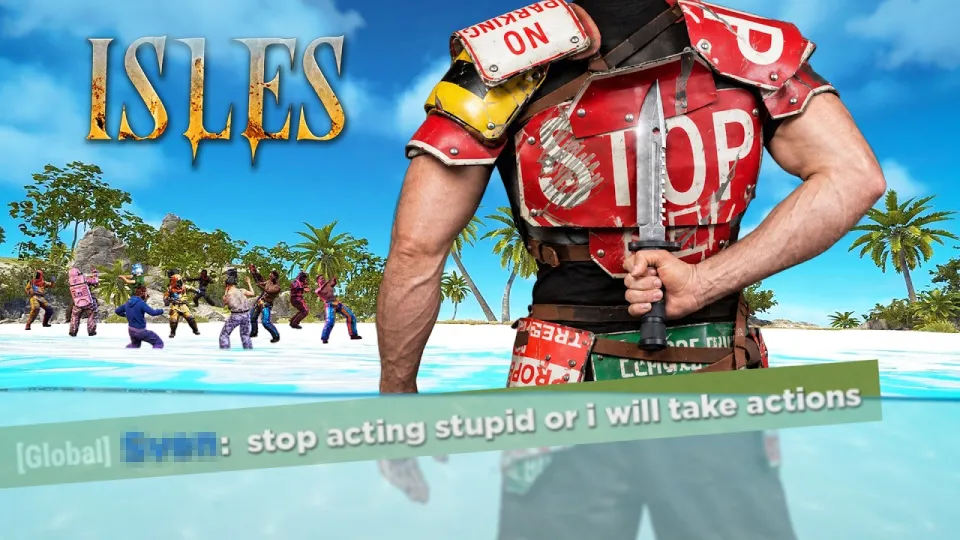
Video: Not Another Rust Streamer Server
You can order the same kind of articles for your own video to boost it on YouTube and Google. Just message the Telegram bot @sat_sit_bot. The bot writes and publishes the articles itself (with your YouTube video embedded) on popular topical websites (no ads). Free trial — 50 articles.
· based on the channel Stimpee
Key takeaways
- Rust Isles is an invite-only streamer server with a pirate theme, custom rules and active admin moderation.
- Official Rust servers run vanilla wipes and have no staff policing clan politics, betrayals or roof camping.
- Streamer servers trade raw survival pressure for roleplay, content moments and heavy admin intervention.
- Admins on streamer servers routinely inspect inventories and strip weapons to keep content creators in check.
- Stimpee returned to a streamer server after years away and documented the experience on his channel.
Rust streamer servers are better for players who want structured roleplay, guaranteed content and admin protection, while official servers remain the better choice for anyone who wants the real, unmoderated survival loop. The distinction matters because the two environments reward completely different skills: one rewards social navigation and reading the room, the other rewards farming efficiency, base design and raid timing. Stimpee's return to a streamer server after years away, documented on his Twitch channel, is a clean case study of what changes when Rust becomes a shared stage instead of a war of attrition.
What Rust Isles actually is and how invite-only servers work
Rust Isles is a private streamer server built around a pirate theme, where access comes by invitation rather than by paying for a slot. That single detail reshapes everything downstream. On a public server, the population is anonymous and disposable; on an invite-only server, every neighbour is a known creator with an audience, a reputation and a reason to protect their segment of the map.
The practical consequences are easy to list:
- Population is capped by the invite list, so queues and wipe-day stampedes are not the main threat.
- Admins are present, named and reachable, and they intervene directly rather than relying on automated anti-cheat alone.
- Custom rules can override vanilla expectations, including limits on stealing, betrayal and base behaviour.
- Wipes are scheduled around content cycles rather than purely around the vanilla monthly cadence.
- Reputation is public: a bad raid is not just a lost base, it is a clip that follows you.
That last point is the one most viewers underestimate. On a normal server, getting betrayed is a mechanic. On a streamer server, getting betrayed is a storyline, and the person who did it will hear about it from chat within minutes.
Why streamer server politics feel so different from vanilla Rust
The defining feature of a streamer server is that social rules replace some of the survival pressure, and that trade is not always comfortable for either side. A clan leader on a private server can recruit a stranger, hand over gear and expect loyalty, but loyalty is not enforced by game mechanics, only by an unwritten agreement. When that agreement breaks, the reaction tends to be emotional rather than tactical, because the loss is reputational as much as material.
This is where the pirate theme creates a genuine tension. A server themed around raiding, stealing and betrayal logically invites exactly that behaviour, yet the same server may carry rules or social expectations that punish it. The result is a strange middle ground where a player can be criticized for doing the thing the setting is named after.
For solo players, the calculus is different again. On vanilla Rust, a solo survives by hiding, farming quietly and picking fights on their own terms. On a streamer server, a solo survives by being useful, entertaining or forgettable, because being interesting is what gets you visited.
How admins handle troublemakers and why inventory checks happen
Admin intervention on private servers is direct and often visible, up to and including opening a player's inventory to remove weapons that are considered too disruptive. That level of hands-on moderation is unthinkable on official servers, where staff generally will not arbitrate a raid or confiscate gear because someone was too effective.
The reasoning behind it is usually content balance rather than punishment. A private server exists to keep a group of creators active and watchable for the length of a wipe cycle. One player who snowballs into an unstoppable force can end that cycle early by driving everyone else off the map or into hiding. Removing their tools is a crude but effective way to stretch the wipe.
That practice also explains a recurring pattern viewers notice: admins tend to know where certain players are and what they are carrying. On a small server, attention is a resource, and the most disruptive player attracts the most of it.
Roof camping, clans and the habits that survive any server type
Roof camping, offline raiding and clan snowballing are not server-specific problems, they are Rust problems, and they follow players onto private servers with the same persistence. What changes is the response. On vanilla, a roof camper is countered with a tower, a well-placed rocket or simply a decision to farm elsewhere. On a streamer server, a roof camper is countered with a conversation, a rule clarification or an admin message.
Clans behave similarly. A large group will still dominate a small map, still farm faster and still control monuments, but on an invite-only server the clan also carries a public relations burden. Every raid is watched, every betrayal is clipped and every excuse is scrutinized by an audience that has already picked a side.
For a solo player watching from outside, the useful takeaway is that mechanics do not change but accountability does. If you want to learn how Rust actually works at full pressure, nothing replaces a populated vanilla server. If you want to learn how Rust players actually behave when they cannot hide behind anonymity, a private server is a faster teacher.
What viewers get wrong about streamer roleplay servers
The most common misconception is that these servers are easy mode, a playground where nothing matters. In practice they are socially harder than vanilla, because every decision carries a witness. A player who steals a boat and strands a crew is not just making an enemy, they are generating a public argument that will be replayed and discussed long after the wipe ends.
A second misconception is that roleplay means scripted. It rarely does. The setting provides a frame, a theme and a cast, but the actual events emerge from ordinary Rust behaviour, which is precisely why the format produces memorable moments. The entertainment comes from the collision between normal survival instincts and a group of people who all know each other.
A third is that the server is representative of Rust as a whole. It is not. It is a curated environment with a small population, active staff and a shared audience, and treating it as a guide to the live game will give you a badly skewed picture of how raiding, farming and diplomacy work on a public server.
Should you play on a streamer server or a normal one
Choose a normal server if you want to improve at the game, and choose a streamer server only if you have been invited and want the social experience. That is the honest split. Vanilla servers teach you base layouts, raid costs, monument routes, crafting priorities and how to recover after losing everything, and none of those lessons are optional if you want to be good at Rust.
Private servers teach a different, narrower skill set: negotiation, reputation management, knowing when a joke lands and when it starts a war. Those skills are real, but they do not transfer to a random official wipe where nobody knows your name.
If you do end up on a private server, three habits keep you alive longer than any base design:
- Do not accept gear from a clan leader without understanding what they expect in return.
- Keep your most valuable loot somewhere you are willing to lose, because attention finds the loudest player first.
- Assume every conversation is public, because on a streamer server it usually is.
Useful links
- Stimpee on Twitch — live streams and the full streamer server sessions.
- Stimpee on Twitter — clips, announcements and wipe updates.
- Stimpee on Instagram — short-form highlights.
- Stimpee's Discord — community chat and server news.
Final verdict on Rust streamer servers
Streamer servers like Rust Isles are a fascinating lens on Rust, but they are not a substitute for the real game. They compress social dynamics, amplify reputation and add admin oversight that vanilla players never see, which makes them excellent viewing and a strange place to actually learn survival. Stimpee's return to that environment after years away shows both sides clearly: the format produces stories that a normal wipe cannot, and it also produces arguments that a normal wipe would resolve with a rocket. Watch the full run on Stimpee's Twitch channel if you want to see how the social layer of Rust behaves when everyone is watching, and keep your serious practice on a populated vanilla server.
Source: Not Another Rust Streamer Server · Markdown version
Questions & answers
Are streamer servers easier than official Rust servers?
Not mechanically. The loot tables, raid costs and combat are broadly the same, but the social pressure is higher because every action has an audience. You are less likely to be offline raided by a random stranger and more likely to be judged for how you treat your neighbours.
Why do admins on private Rust servers take weapons out of player inventories?
Usually to stop one player or group from ending the wipe cycle early by dominating everyone else. Private servers depend on keeping a small roster of creators active and watchable, so staff will intervene when a single snowball threatens the whole season.
Can a solo player survive on an invite-only streamer server?
Yes, but the survival strategy changes. Instead of hiding and farming quietly, a solo needs to be useful, entertaining or genuinely forgettable, because being interesting is what attracts visitors. Accepting gear from a clan also creates obligations that are not written into any game mechanic.
Does the pirate theme on Rust Isles mean stealing and betrayal are allowed?
The theme invites raiding and treachery, but private servers often carry social rules or unwritten expectations that punish exactly that behaviour. The result is a contradiction where a player can be criticized for doing the thing the setting is named after, which is a big part of why these servers generate so much drama.