How to Get So Good at Valorant It Feels Like Smurfing by Fixing Reactions Not Mechanics
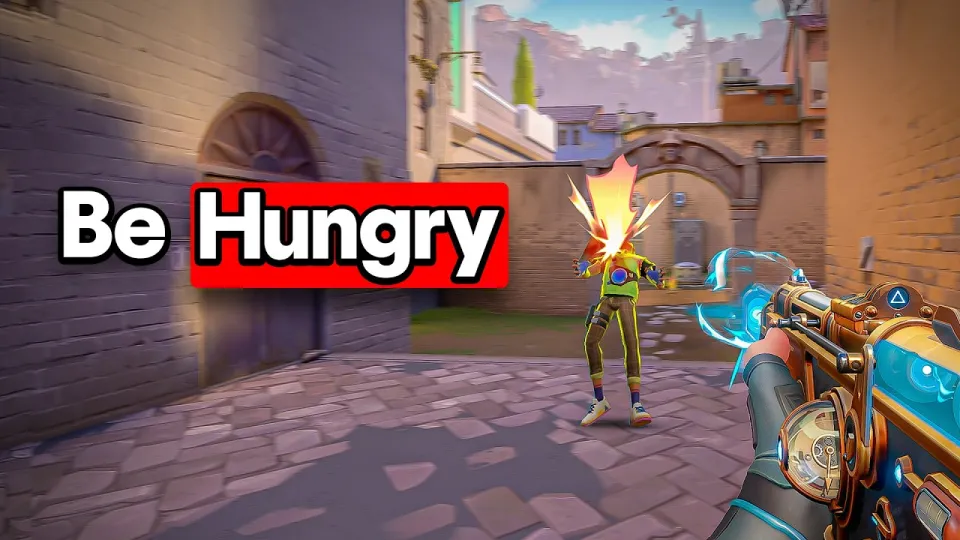
Video: How to Get So Good at Valorant it Feels Like Smurfing
You can order the same kind of articles for your own video to boost it on YouTube and Google. Just message the Telegram bot @sat_sit_bot. The bot writes and publishes the articles itself (with your YouTube video embedded) on popular topical websites (no ads). Free trial — 50 articles.
· based on the channel Konpeki
Key takeaways
- The core idea: react to the enemy instead of running a fixed script every round.
- Unpredictability beats raw aim — the same peek twice in a row is a free kill for a good opponent.
- Konpeki's Immortal Roadmap Program promises 5 divisions in 10 weeks at roadmap.gg/v/lUfrMRb74SE.
- Movement drills in the Range can be tuned with the movement error multiplier, a viewer suggests 0.5.
- Smurfing is not a separate skill set: it is consistency plus fewer mistakes than everyone else in the lobby.
Getting so good at Valorant that you look like a smurf is not about hitting impossible flicks — it is about reacting to what the enemy actually does instead of running the same scripted peek, plant or rotation every round. Konpeki's breakdown "How to Get So Good at Valorant it Feels Like Smurfing" builds the whole argument around that one principle, and the free coaching resources behind it live in his Discord at https://www.discord.gg/UnRETVmRpV, while the paid Immortal Roadmap Program (5 divisions in 10 weeks, guaranteed) is booked through the free application call at roadmap.gg.
The video is not a settings guide or a crosshair-code drop. It is a mental and behavioral checklist: how you take duels, how you move, how you plan a round, and how you review your own mistakes so the same death does not repeat. Below is the practical version of that framework, expanded with the questions Konpeki's own audience keeps asking in the comments.
Why Reaction Beats Mechanics in Valorant
A player who reacts is harder to read than a player who is faster. Most Valorant players lose duels not because their aim is bad but because they commit to a decision before they have any information — they swing the same angle at the same timing, they push the same site with the same utility, and a decent opponent punishes it every time. The fix is to treat every engagement as a question you answer in real time: where is the enemy, what did he just do, and what does that let you take for free?
That reframing matters because it changes what you practice. Instead of grinding aim routines hoping reflexes will save you, you practice gathering information first — a jiggle, a drone, a teammate's contact — and only then choosing the duel. Reaction-based play looks slow in a replay and feels unfair to the enemy, which is exactly the "smurf" sensation people describe.
The Four Habits That Make You Look Like a Smurf
Consistency is what separates a smurf from a lucky player, and consistency in Valorant comes from four repeatable habits.
- Change your timing every round. If you peeked A main fast on round three, walk it on round six. Predictability is the single biggest gift you can give a defender.
- Take only duels you chose. A duel you did not plan is a coin flip; a duel you set up with utility, an off-angle or a teammate's trade is close to a guaranteed kill.
- Play your life, not the highlight. Dying for one kill resets your economy and your positioning. Surviving with information is worth more than a 1-for-1.
- Simplify the plan. One clear idea per round — default, rush, split, lurk — beats five half-ideas that nobody on the team is executing.
None of these require Radiant mechanics. They require discipline, which is why a Diamond player who follows them can look like a smurf in a Gold lobby.
Movement and Aim Drills That Actually Transfer to Matches
Aim training only helps if the movement around it matches real fights. In the Range, the standard drill is strafing left and right and firing one shot each time you change direction, so you learn to shoot while your character is stopping rather than while sliding. A viewer in the comments suggests turning the movement error multiplier down to 0.5 to make the drill stricter and expose sloppy counter-strafing earlier — a reasonable way to raise the difficulty without changing the drill itself.
The open question people keep asking is whether you should fully release the movement keys between shots or keep the A–D–A rhythm going and fire the moment the direction switches. Both exist in high-level play: the release version builds clean stopping mechanics, while the continuous version trains the timing you actually need in a fight. Alternate between them — one block of strict stops, one block of rhythm shooting — and keep sessions short enough that your form does not fall apart.
Reading the Map Instead of the Scoreboard
Map awareness is the cheapest rank-up tool in Valorant because it costs no aim at all. Before a round starts, decide what information you need and who on your team is best positioned to get it. During the round, track three things: which enemies have been seen, which utility has been used, and where the spike is. If two enemies are confirmed on one site and the spike is not with them, the retake is already half solved.
This is also where "react to the enemy" becomes concrete. If the defenders are stacking one site, do not force it — take space on the empty side, make them rotate, and punish the rotation. If they are playing passive, take map control and starve them of information. The scoreboard tells you who is winning; the map tells you why.
Common Questions From Players Trying to Climb
The most frequent doubts around this topic are practical, not philosophical.
- Is this just for PC? Console players ask about coaching too, and the framework is identical — reaction-based peeking, timing changes and simple plans apply on a controller, though movement drills have to be adapted to stick input.
- Do I need a certain rank or age to apply for coaching? Programs like the Immortal Roadmap have limited slots and an application step, so the honest answer is to ask directly during the free call rather than assume you are too low or too old.
- Why do my teammates feel like bots? Bad teammates are a real variable, but the controllable part is your own decision quality. You cannot fix matchmaking; you can stop dying in ways that hand the enemy free rounds.
- How long until it shows? Players report rank jumps after weeks, not days, because the habits have to survive pressure. The guarantee Konpeki advertises — 5 divisions in 10 weeks — is built on that timeline.
Mistakes That Keep You Stuck in the Same Rank
Most stuck players repeat the same three errors. First, they practice mechanics in isolation and never connect them to a round plan, so their aim improves while their win rate does not. Second, they treat every death as bad luck instead of reviewing the decision that created it — the bad angle, the solo push, the wasted ultimate. Third, they change their entire setup, agent pool and crosshair every week, which resets progress before it compounds.
A simple review routine fixes all three: after each match, write down one decision you would change, not one shot you missed. Over twenty games that list becomes your personal curriculum, and it is far more useful than any generic tier list.
Useful Links
- Immortal Roadmap Program application (5 divisions in 10 weeks, guaranteed): https://roadmap.gg/v/lUfrMRb74SE
- Free coaching resources and office hours in Discord: https://www.discord.gg/UnRETVmRpV
- Twitch streams: https://www.twitch.tv/konpekichan
- Twitter/X: https://twitter.com/coachpeki
- TikTok: https://www.tiktok.com/@coachpeki
What Actually Separates You From the Lobby
Looking like a smurf in Valorant comes down to being the player who reacts, adapts and repeats good decisions while everyone else autopilots. Fix your timing, choose your duels, keep your movement clean and simplify your round plan — the mechanical gap between ranks is smaller than most players believe, and the behavioral gap is where the real RR lives. Konpeki's breakdown is a useful starting point because it treats improvement as a system rather than a highlight reel, and if you want the structured version, the Immortal Roadmap Program is where that system gets enforced week by week: book a free call and reserve a spot. Watch the original video on the Konpeki channel, then pick one habit from this article and run it for your next ten games before adding another.
Source: How to Get So Good at Valorant it Feels Like Smurfing · Markdown version
Questions & answers
Is it possible to look like a smurf without Radiant-level aim?
Yes. The behaviors that make a player look like a smurf — changing timing, choosing duels, playing your life and simplifying round plans — are decision-based, not aim-based. A disciplined Diamond player following them can dominate a Gold lobby without elite mechanics. Aim still matters at the top, but it is rarely the reason a mid-rank player is stuck.
Should I fully stop moving between shots in the Range strafe drill?
Both versions have value. Fully stopping builds clean counter-strafe mechanics and exposes sloppy input, while firing the instant you switch direction trains the timing you need in real fights. A practical split is one block of strict stops and one block of continuous A–D–A rhythm shooting per session.
Does this approach work for console players?
The framework transfers, because reacting to the enemy, varying your timing and simplifying plans do not depend on input device. Movement drills need adaptation since controller strafing and stopping behave differently, but the decision-making layer is identical on PS5 or Xbox.
How long does it take to see a real rank increase?
Expect weeks rather than days, because new habits have to hold up under pressure before they raise your win rate. Programs that advertise structured results, such as 5 divisions in 10 weeks, are built around that timeline and rely on weekly review rather than one long grind session.